


Project "M5 - Flat Eric Edition"


Thread Starter
Contributors
Joined: Apr 2007
Posts: 5,851
Likes: 5
From: Kajaani, Finland
My Ride: Bmw 530d 2004

Feb 10, 2013
I didn't test the Furniture Clinic products this weekend. I worked with something else; Changed the activated charcoal filter for the fuel tank.
I wonder why this system (along dew others) has to be so d*mn sophisticated .
.
I haven't read about the clogged filter and its consequences on forums, but a BMW mechanic adviced me to change it. He said he had installed a whole new gas tank (and its internal gadgets) into couple M5s due to a clogged intake air filter. The strong fuel pump (or is it the intake manifold actually?) had sucked the tank flat! I don't wonder, though. The rear wheel well isn't the most cleanest place to take air into anything.
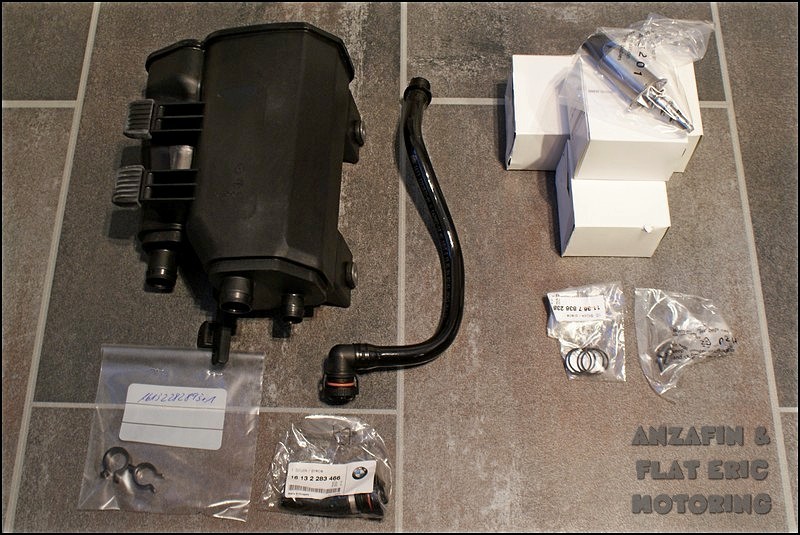
Well, I didn't speculate the need to change it any more than that, and I ordered a new filter along the new VANOS solenoids. Today I changed the filter. This is how it was done.
Opened the TIS just for case at first.
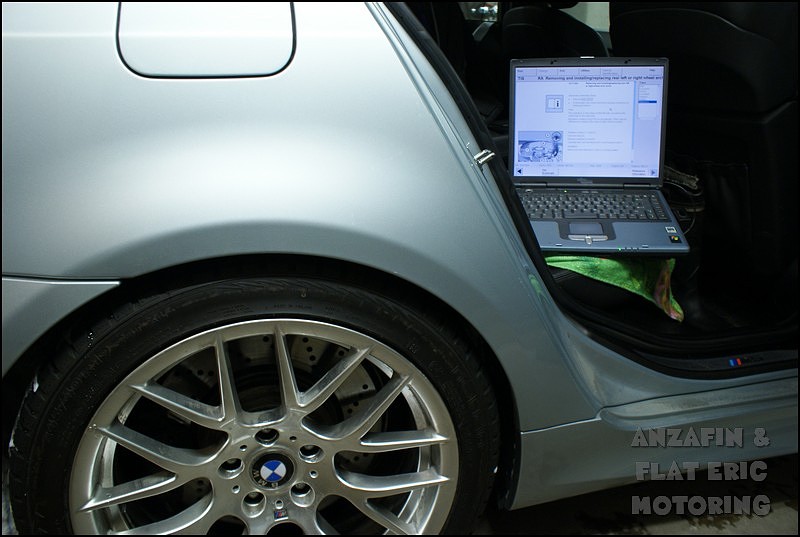
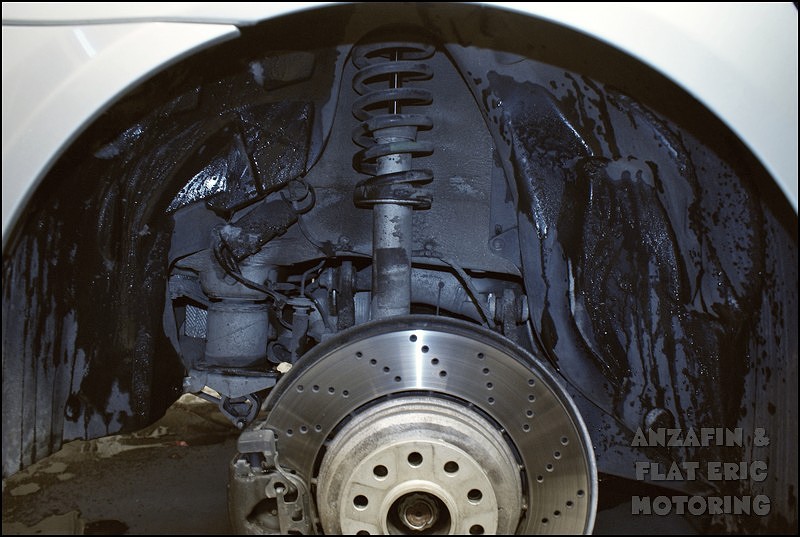
After removing the right rear wheel, I had to remove the inner fender liner.
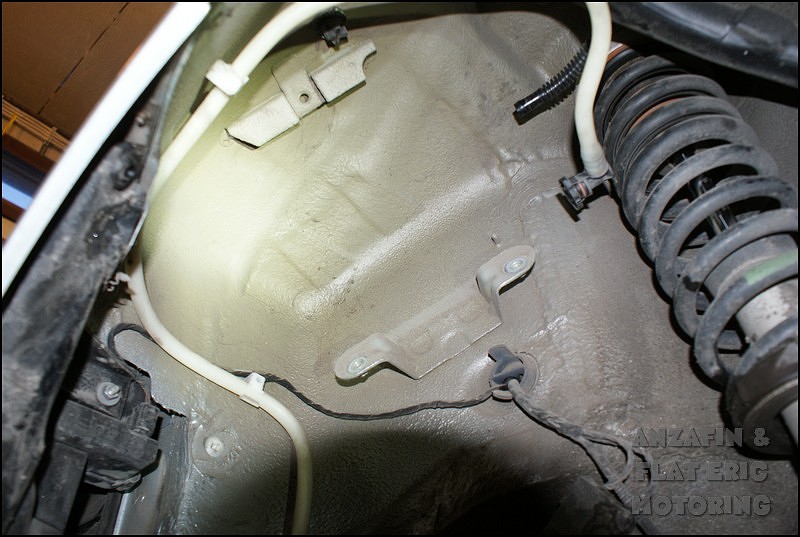
There it is, the filter.
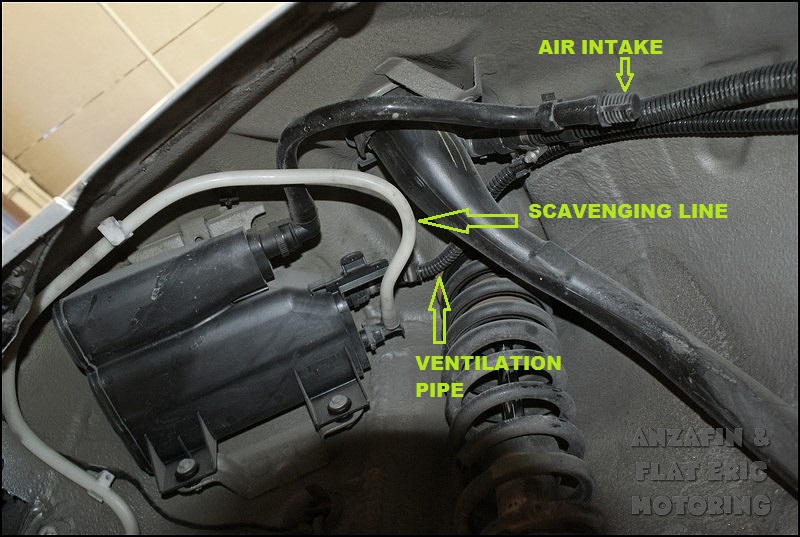
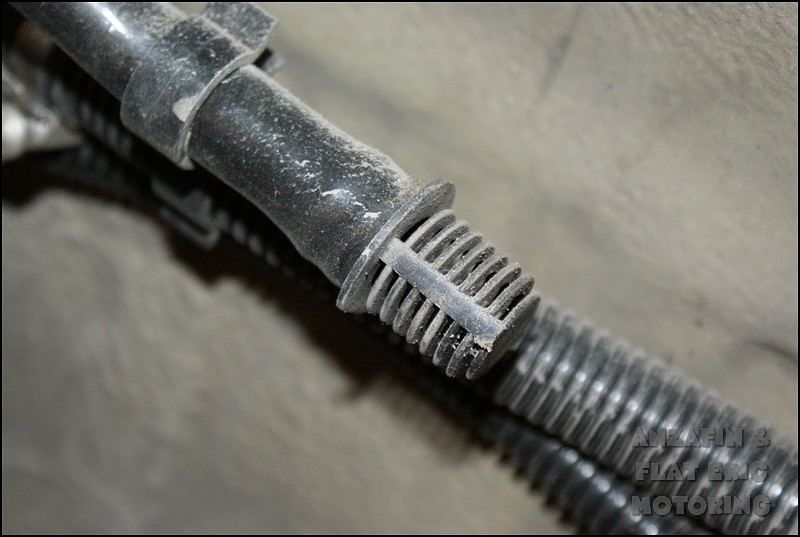
This is where the air is sucked in.
Disconnecting the pipes and two bolts and that's it.
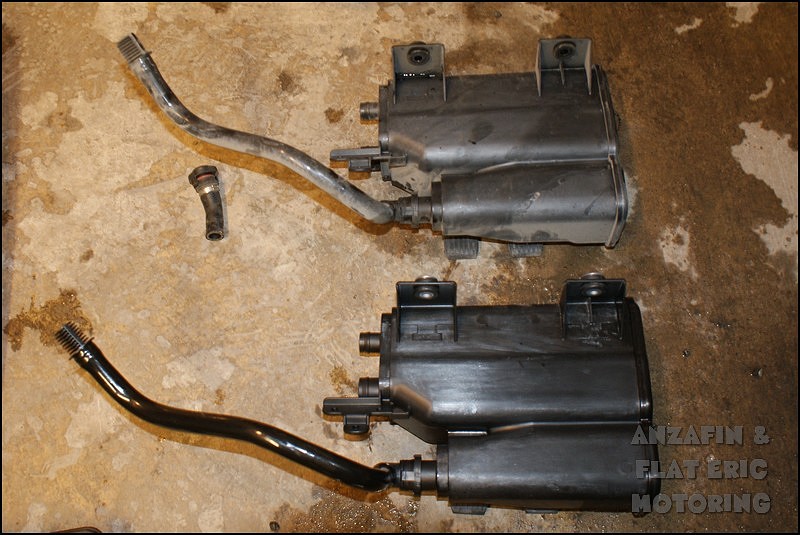
New vs old.
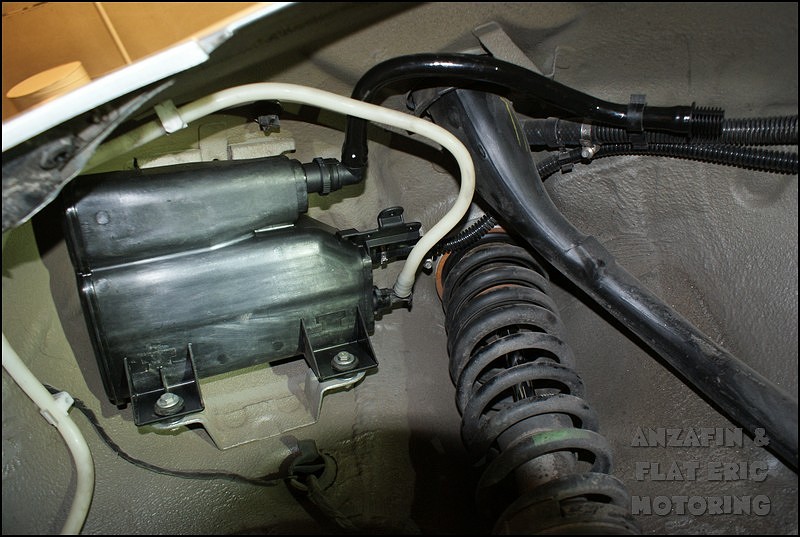
New mounted.
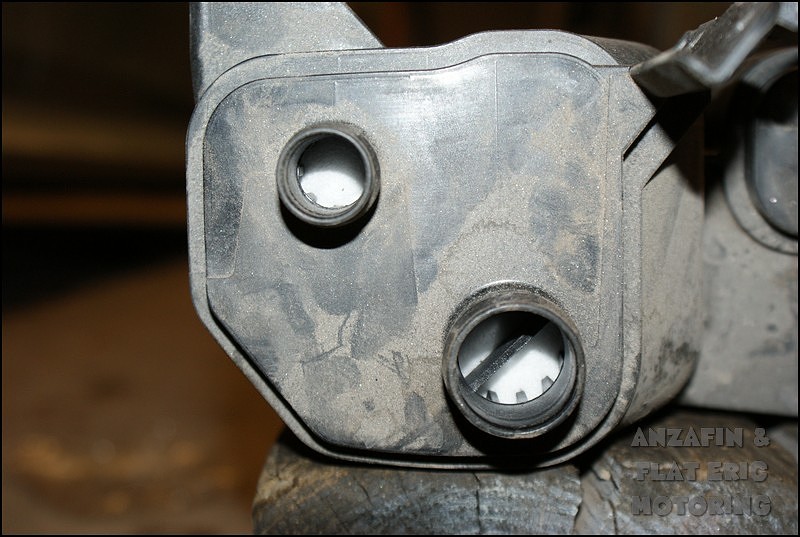
The filter behind the scavenging line hole and ventilation pipe hole looks clean.
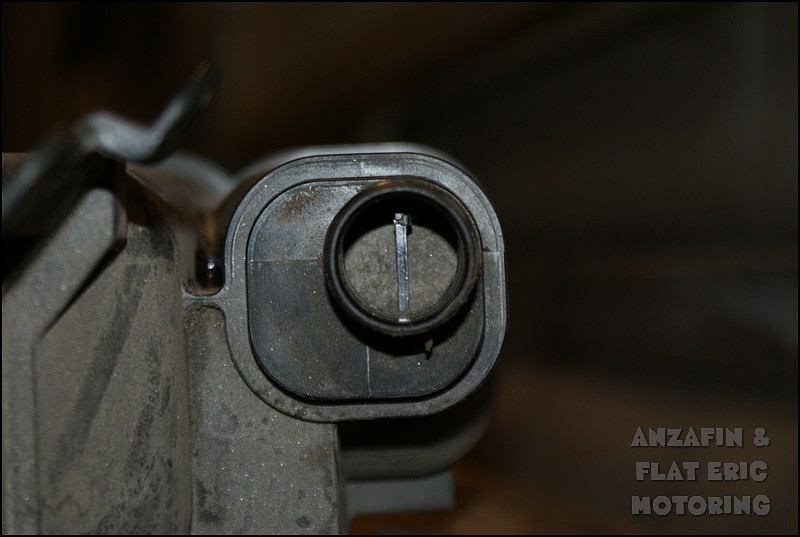
But it was looking worse at the intake end.
The filter and couple of little parts for it was 140€. That's better than a new tank, sensors and stuff for 1500€, I think...
- Antti -
I didn't test the Furniture Clinic products this weekend. I worked with something else; Changed the activated charcoal filter for the fuel tank.
I wonder why this system (along dew others) has to be so d*mn sophisticated
. I haven't read about the clogged filter and its consequences on forums, but a BMW mechanic adviced me to change it. He said he had installed a whole new gas tank (and its internal gadgets) into couple M5s due to a clogged intake air filter. The strong fuel pump (or is it the intake manifold actually?) had sucked the tank flat! I don't wonder, though. The rear wheel well isn't the most cleanest place to take air into anything.
Well, I didn't speculate the need to change it any more than that, and I ordered a new filter along the new VANOS solenoids. Today I changed the filter. This is how it was done.
Opened the TIS just for case at first.
After removing the right rear wheel, I had to remove the inner fender liner.
There it is, the filter.
This is where the air is sucked in.
Disconnecting the pipes and two bolts and that's it.
New vs old.
New mounted.
The filter behind the scavenging line hole and ventilation pipe hole looks clean.
But it was looking worse at the intake end.
The filter and couple of little parts for it was 140€. That's better than a new tank, sensors and stuff for 1500€, I think...
- Antti -

Thread Starter
Contributors
Joined: Apr 2007
Posts: 5,851
Likes: 5
From: Kajaani, Finland
My Ride: Bmw 530d 2004
Ok, I got some more information from a Finnish forum about the issue.
When the car is parked (not running) the evaporating fuel gases are filtered through this filter and removed from the tank. When the car is running these evaporated fuel gases are sucked into the cylinders via the EVAP valve. If the filter is clogged, and scavenge line isn't getting air, the underpressure in the intake manifold will crush the fuel tank.
Mike, my mechanic didn't mention it, but it is the same filter and mechanism in all petrol E60/61 so I don't see why it wouldn't happen. Part #1 in this pic: RealOEM.com * BMW E60 545i Activated Charcoal Filter/FUEL VENTILAT
Now I note there is a separate dust filter in some cars along the activated charcoal filter, part #5 in the pic above. I wonder if it has any effect into this...
- Antti -
When the car is parked (not running) the evaporating fuel gases are filtered through this filter and removed from the tank. When the car is running these evaporated fuel gases are sucked into the cylinders via the EVAP valve. If the filter is clogged, and scavenge line isn't getting air, the underpressure in the intake manifold will crush the fuel tank.
Mike, my mechanic didn't mention it, but it is the same filter and mechanism in all petrol E60/61 so I don't see why it wouldn't happen. Part #1 in this pic: RealOEM.com * BMW E60 545i Activated Charcoal Filter/FUEL VENTILAT
Now I note there is a separate dust filter in some cars along the activated charcoal filter, part #5 in the pic above. I wonder if it has any effect into this...
- Antti -
Thread Starter
Contributors
Joined: Apr 2007
Posts: 5,851
Likes: 5
From: Kajaani, Finland
My Ride: Bmw 530d 2004
 .
.
Thread Starter
Contributors
Joined: Apr 2007
Posts: 5,851
Likes: 5
From: Kajaani, Finland
My Ride: Bmw 530d 2004
Feb 12, 2013
Ok, I continued with basic maintenance today; oil change.
I was planning to change the VANOS solenoids too after the oil change, but after I had removed the metal cover, plastic cover, removed the fan and the solenoid wiring, I discovered I really need to remove the radiator as well to get properly to the attaching screws. Of course I didn't have the new coolant with me so I had to put it all back for now. Then, when I was installing the last plate, I remembered that I didn't remember to reattach the solenoid wiring! Take everything off again and redo lol! That didn't matter much really, now I've practiced the procedure and hopefully it will happen like in Formula 1 next time !
!
Oh well....
Hello there!
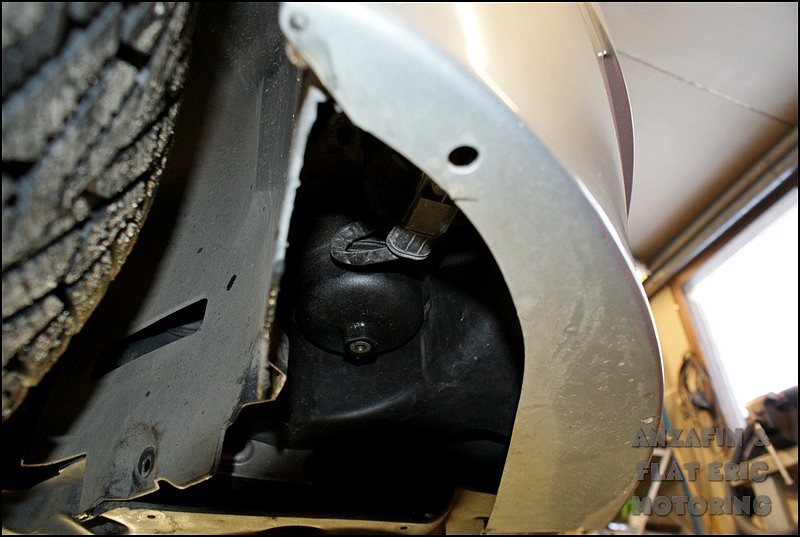
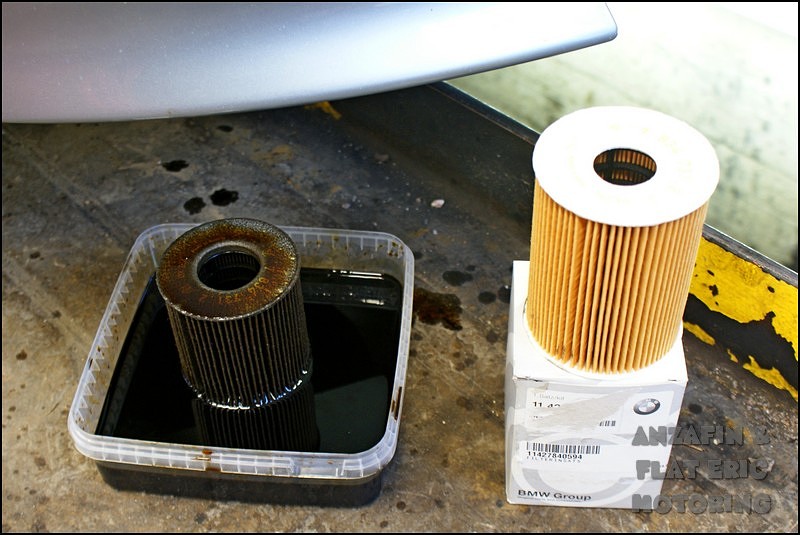
Glug! Glug! Glug! Glug!
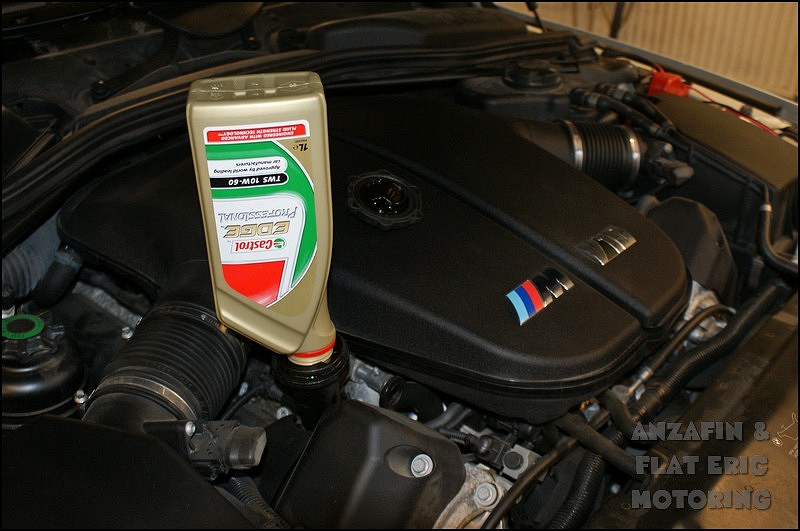
Like it says in maintenance instructions, first put 8 liters in, then measure the oil quantity and then add again. It took 9 liters and now the screen says +0.7 so I managed to get the old oil out pretty well.
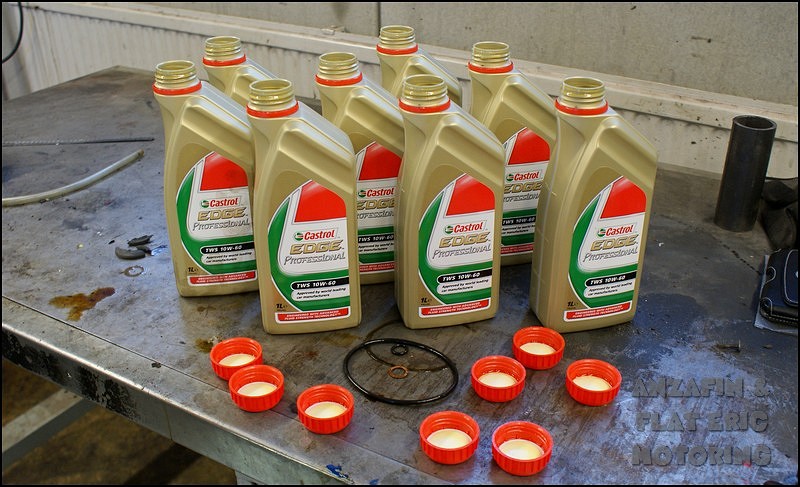
Oh! Eric wasn't with me. He would hate to get oil in to his fur !
!
- Antti -
Ok, I continued with basic maintenance today; oil change.
I was planning to change the VANOS solenoids too after the oil change, but after I had removed the metal cover, plastic cover, removed the fan and the solenoid wiring, I discovered I really need to remove the radiator as well to get properly to the attaching screws. Of course I didn't have the new coolant with me so I had to put it all back for now. Then, when I was installing the last plate, I remembered that I didn't remember to reattach the solenoid wiring! Take everything off again and redo lol! That didn't matter much really, now I've practiced the procedure and hopefully it will happen like in Formula 1 next time
!Oh well....
Hello there!
Glug! Glug! Glug! Glug!
Like it says in maintenance instructions, first put 8 liters in, then measure the oil quantity and then add again. It took 9 liters and now the screen says +0.7 so I managed to get the old oil out pretty well.
Oh! Eric wasn't with me. He would hate to get oil in to his fur
!- Antti -
Last edited by Anzafin; Feb 12, 2013 at 10:45 AM.

Contributors
Joined: May 2009
Posts: 10,496
Likes: 2
From: SoCal
My Ride: 2008 550I LOADED, all options except HUD and NV
Nice work Antti, I keep saying (and this is true of any car, much less a BMW): It's so much cheaper to maintain your car than repair it. Proper maintenance adds years of trouble free driving.
Thread Starter
Contributors
Joined: Apr 2007
Posts: 5,851
Likes: 5
From: Kajaani, Finland
My Ride: Bmw 530d 2004
Feb 24, 2013
Changing the VANOS solenoids.
Here's my report/DIY about changing the VANOS solenoids.
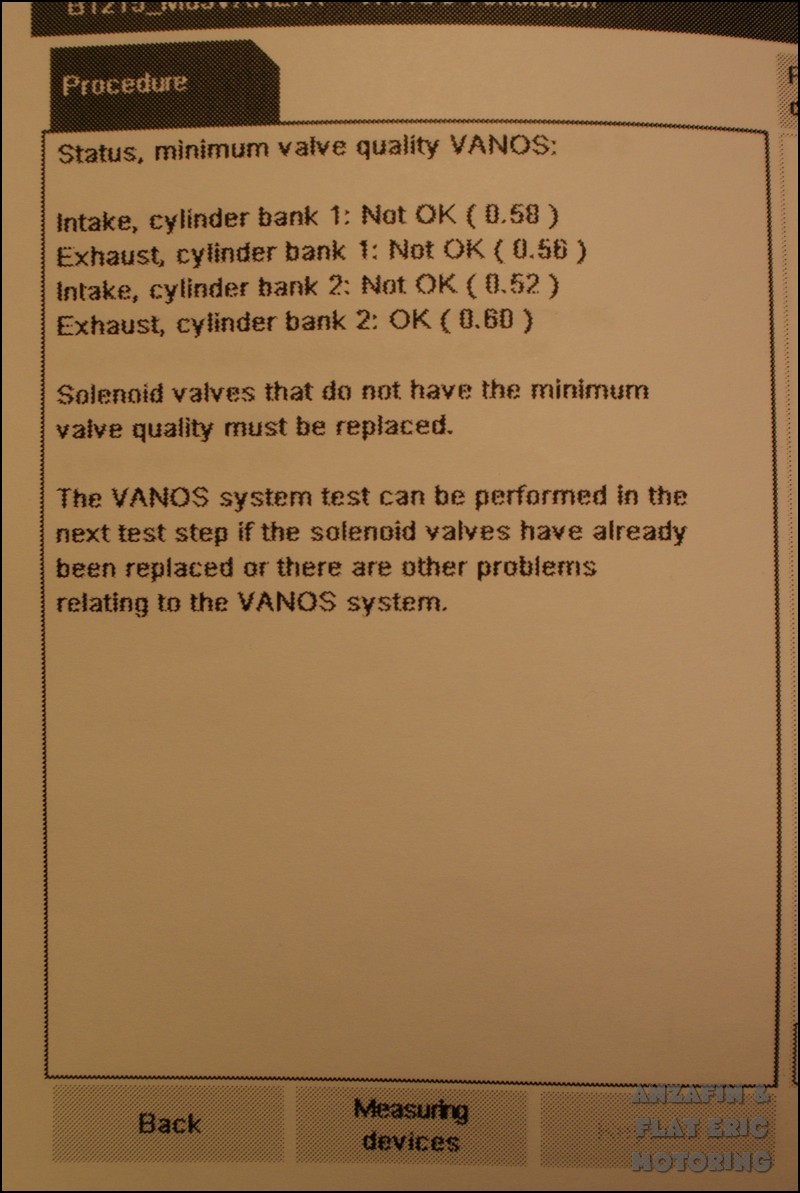
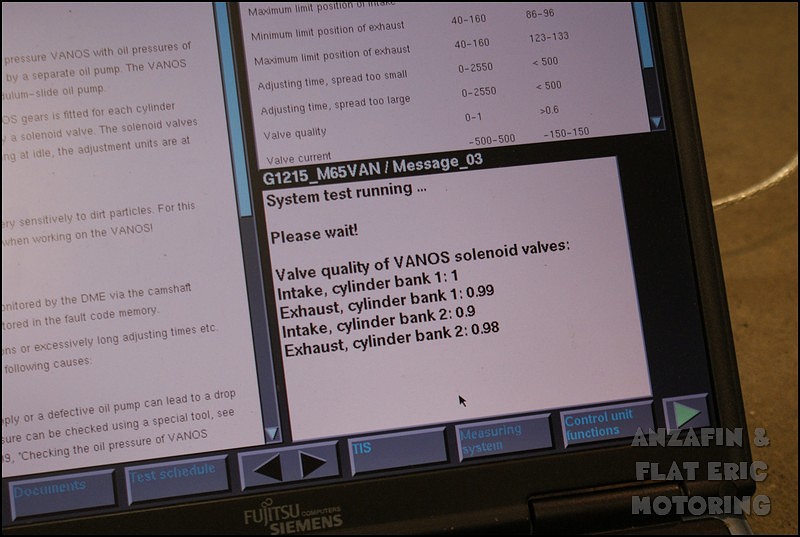
I ran a VANOS test few weeks ago and the report said that three out of four solenoids are NOT OK and they need to be changed. The test gives an index to every solenoid, and the best value is 1.0. As you can conclude, the limit between the "OK" and "NOT OK" is the 0.6.
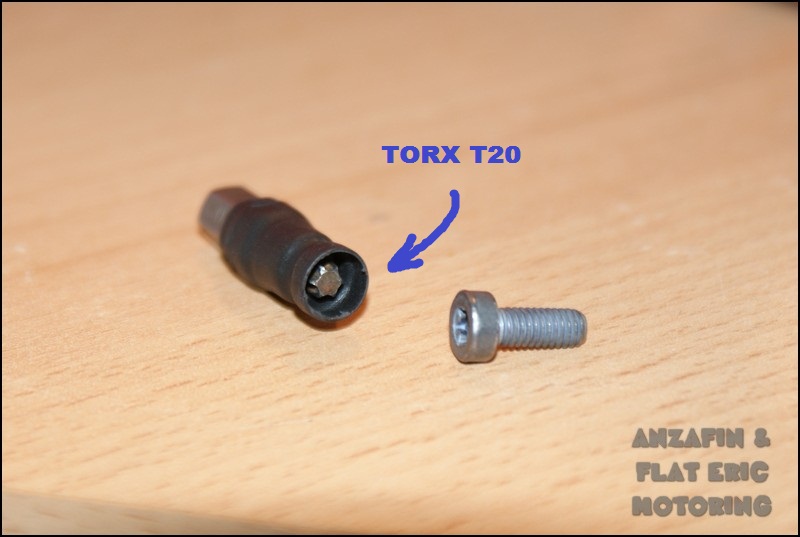
While I was preparing for the job, I modded this holder for a TORX T20 key which is needed to remove the solenoids. The advice for this came from the M5Board member b767capt. Thumbs up for him for all the help he provided .
.
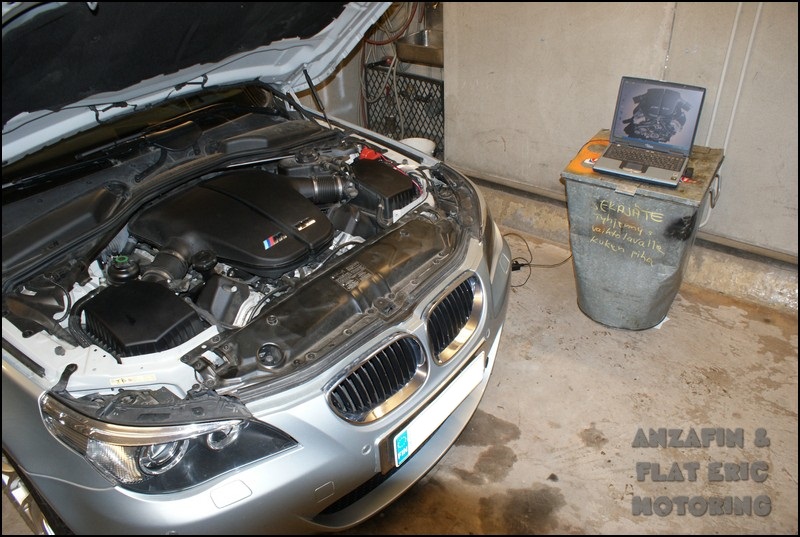
All systems are go!
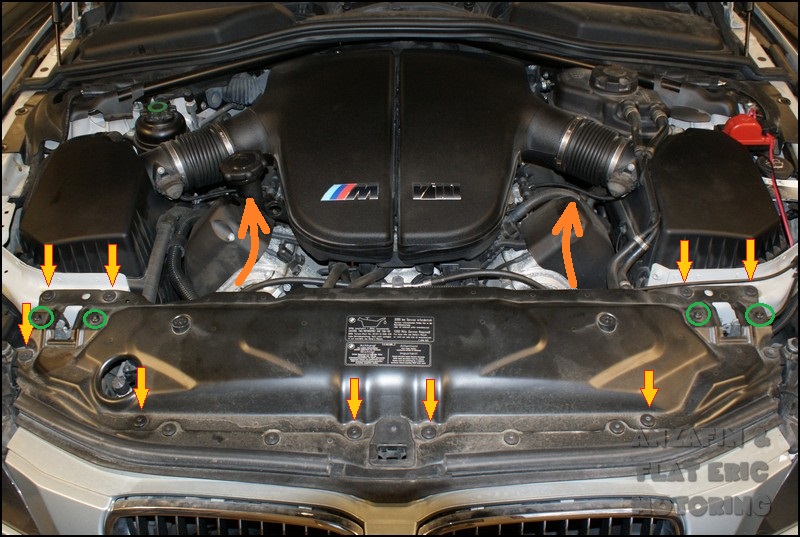
At first a covering plate must be removed. It is hold in place with nine TORX T30 bolts (red/orange arrows). I also removed the hood latches to get this plate a bit further than a feet away lol! The hood latches are also hold in place with TORX T30 bolts (green circles). When these have been removed, the covering plate can be removed towards the big orange arrows.
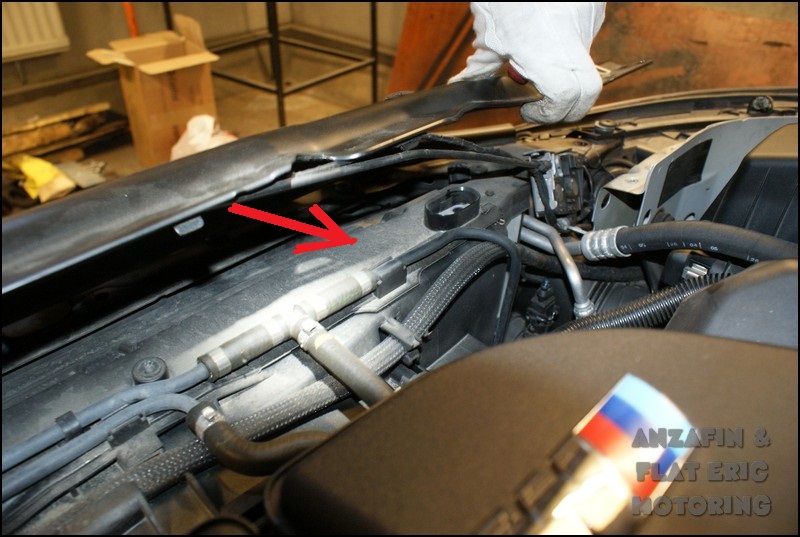
The hood latch cables and detector wiring goes under the plate and they must be released from the little hooks.
Then we have to remove another covering plate that sits on top of the radiator and the electric fan. Five TORX T25 screws.
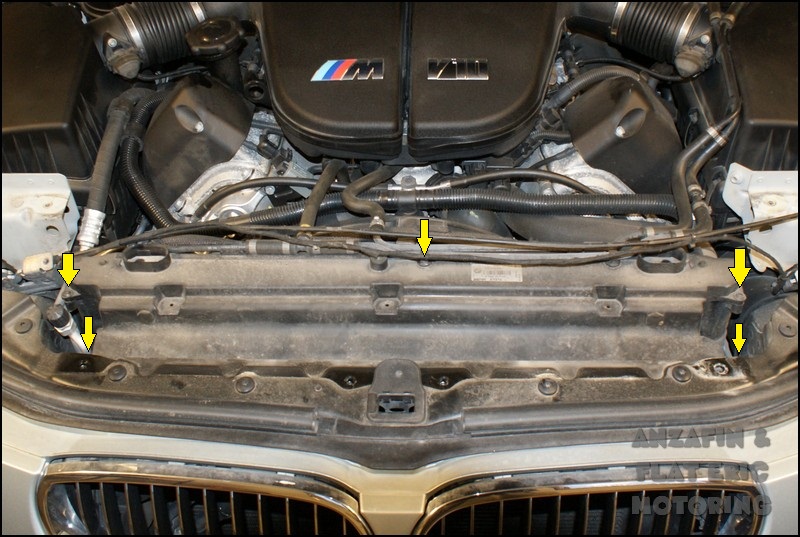
There are two little water hoses that are attached to the cowl with different clips. Detach them.
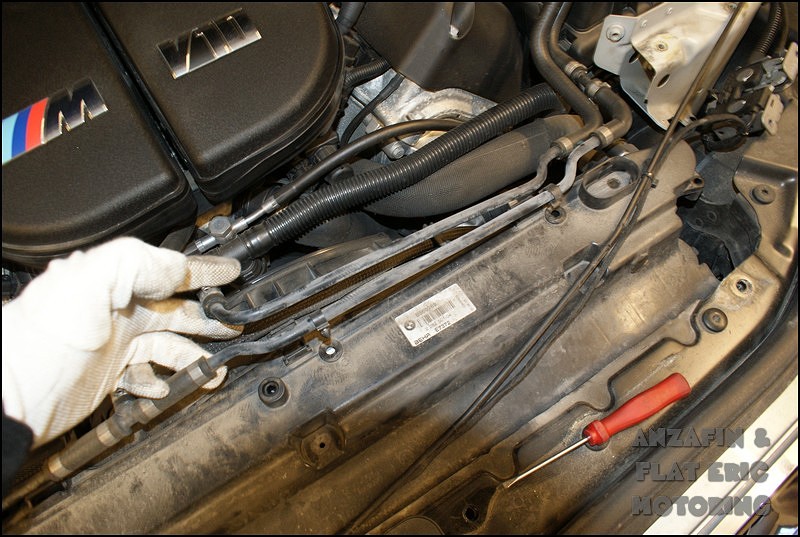
Oh crap!
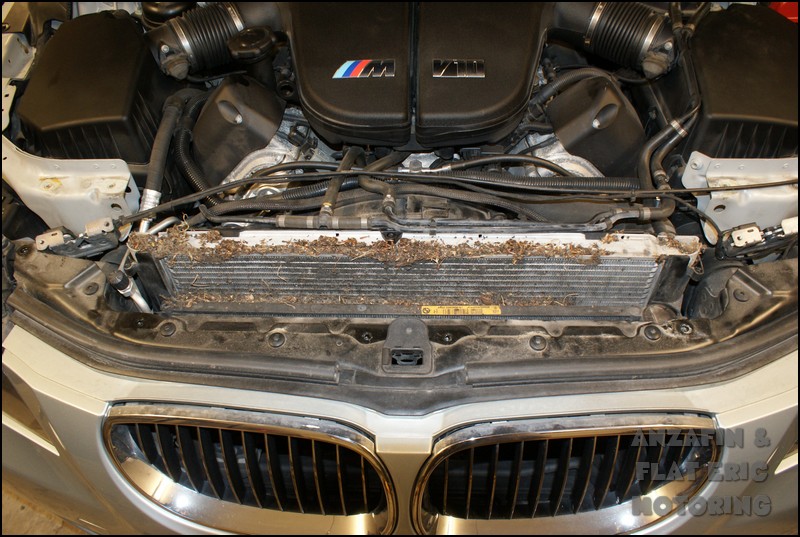
The fan can be removed by lifting it a bit, then the "wings" on left and right have to be turned away from the holders. Then lift the fan up. I broke the other wing to get the fan easier out next time .
.
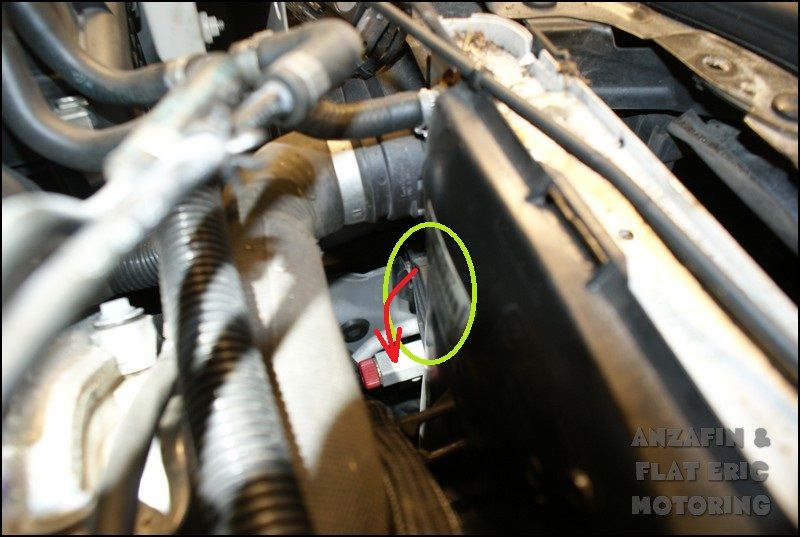
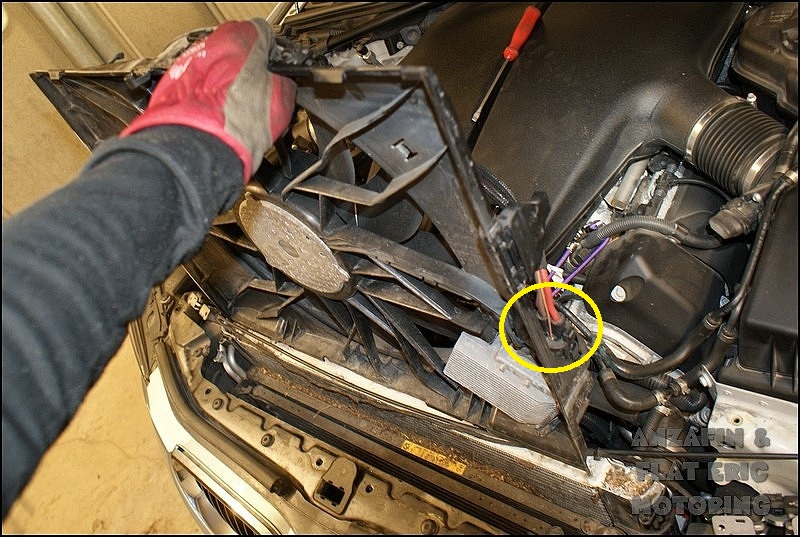
The power cord is easy to remove (yellow circle). Then put the fan aside. TIS says there can be two cords attached but I had only one.
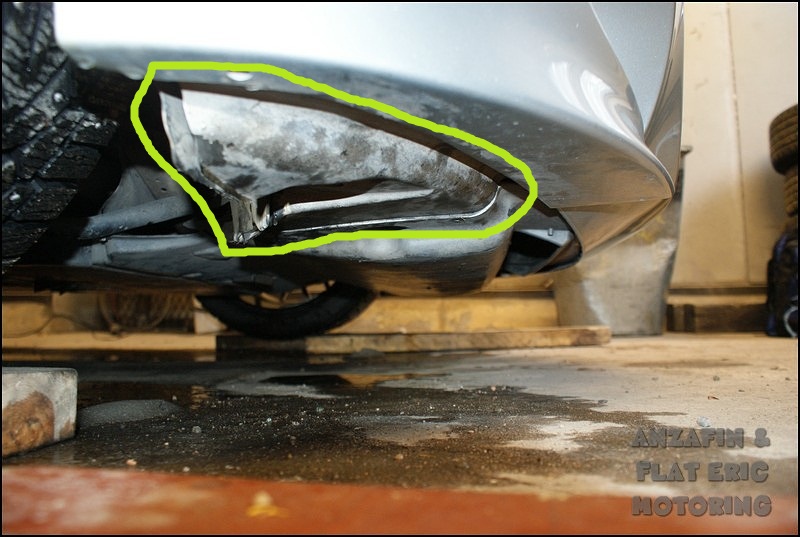
To drain the coolant I removed the little service flap on the bottom of the right front corner. It is fastened with typical undercarriage screws (M8).
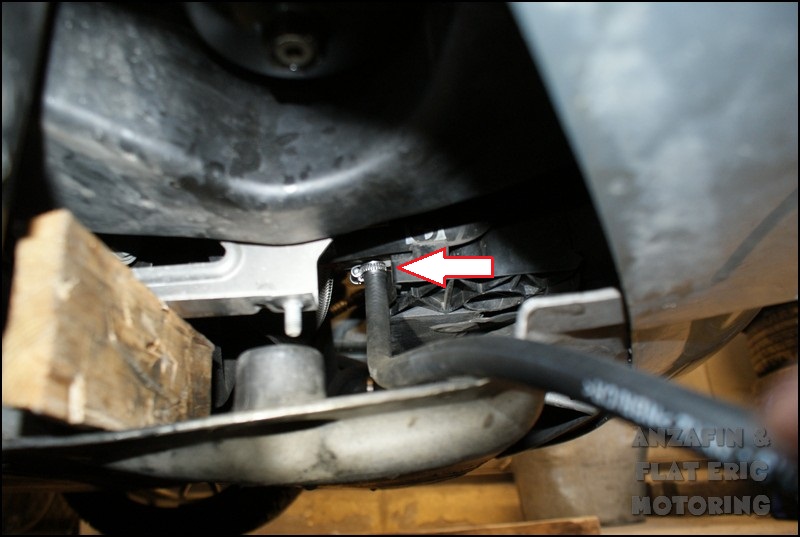
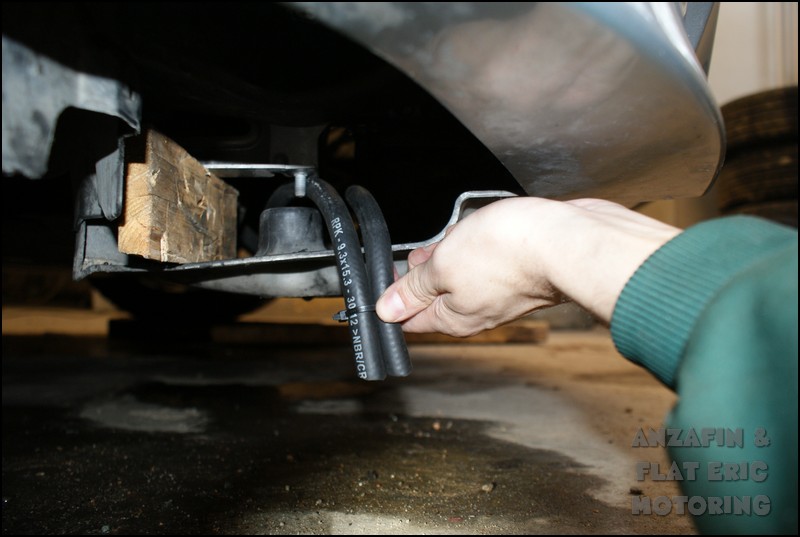
The S85 radiator is divided to two sections, one for both cylinder banks. Therefore there's two draining plugs in it. As b767capt adviced, I installed draining tubes on both of them. The inner diameter is 9.3mm. I used strong fuel line for this purpose so that I can leave them installed for the next time. The lower draining plug can be seen in this picture.
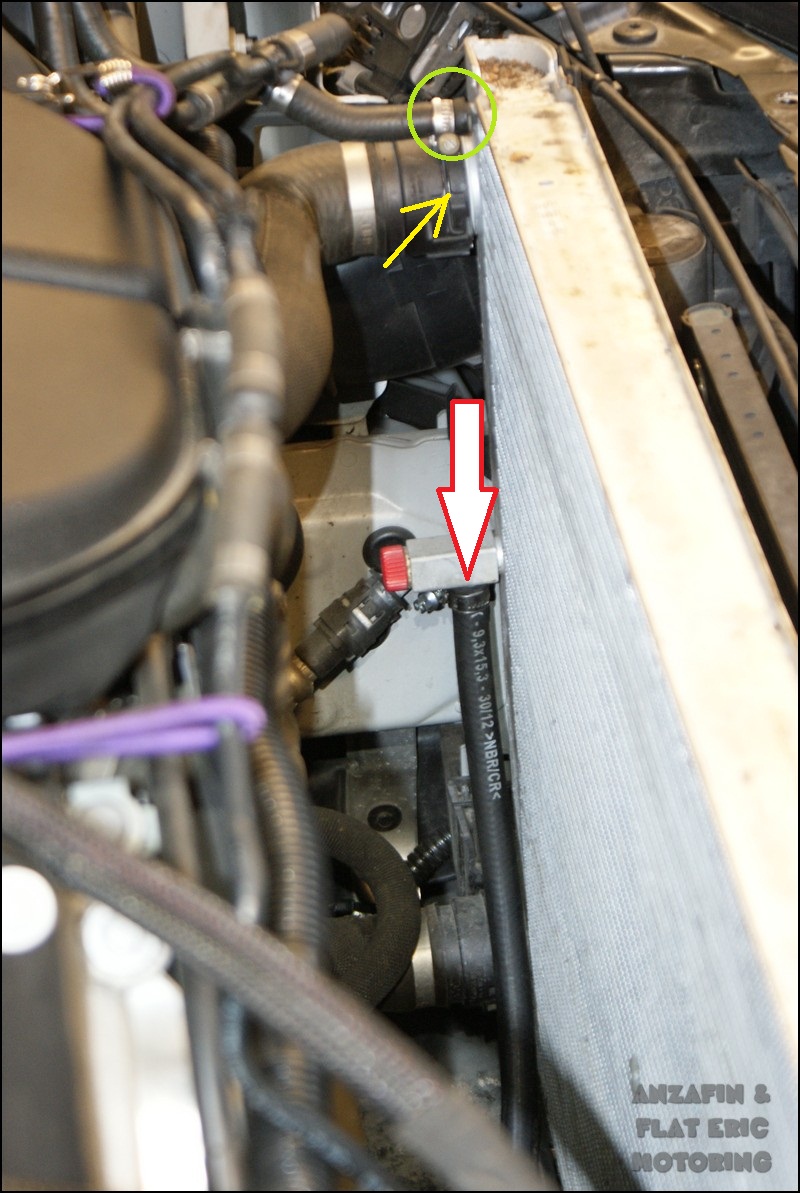
And here's the upper one with the tube attached. Here you can also see the wire clamp that holds the big water hose in place and the little water hose that is attached with the typical hose clamp. There are four big water hoses and two smaller and these have to be removed after draining the coolant.
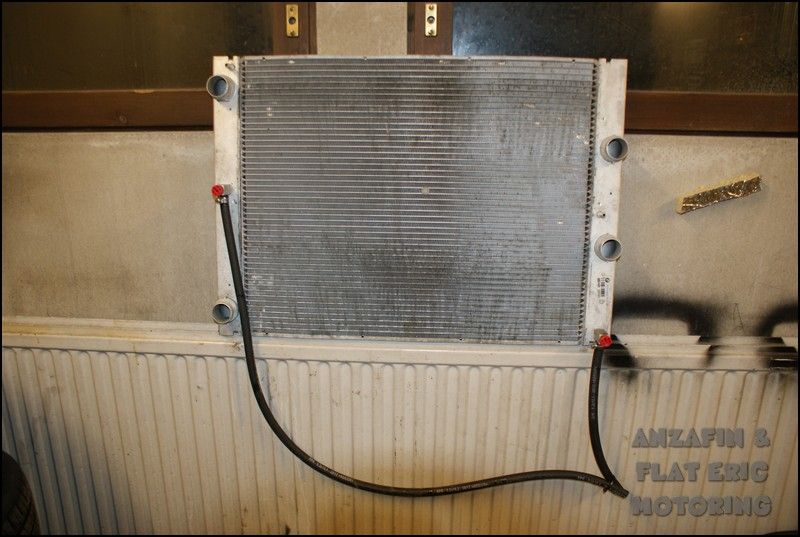
Here are the draining hoses. It is easy to drain the coolant through these without messing the whole engine bay.
Draining itself is easy. First open up the fill cap, then open the red finger screws.
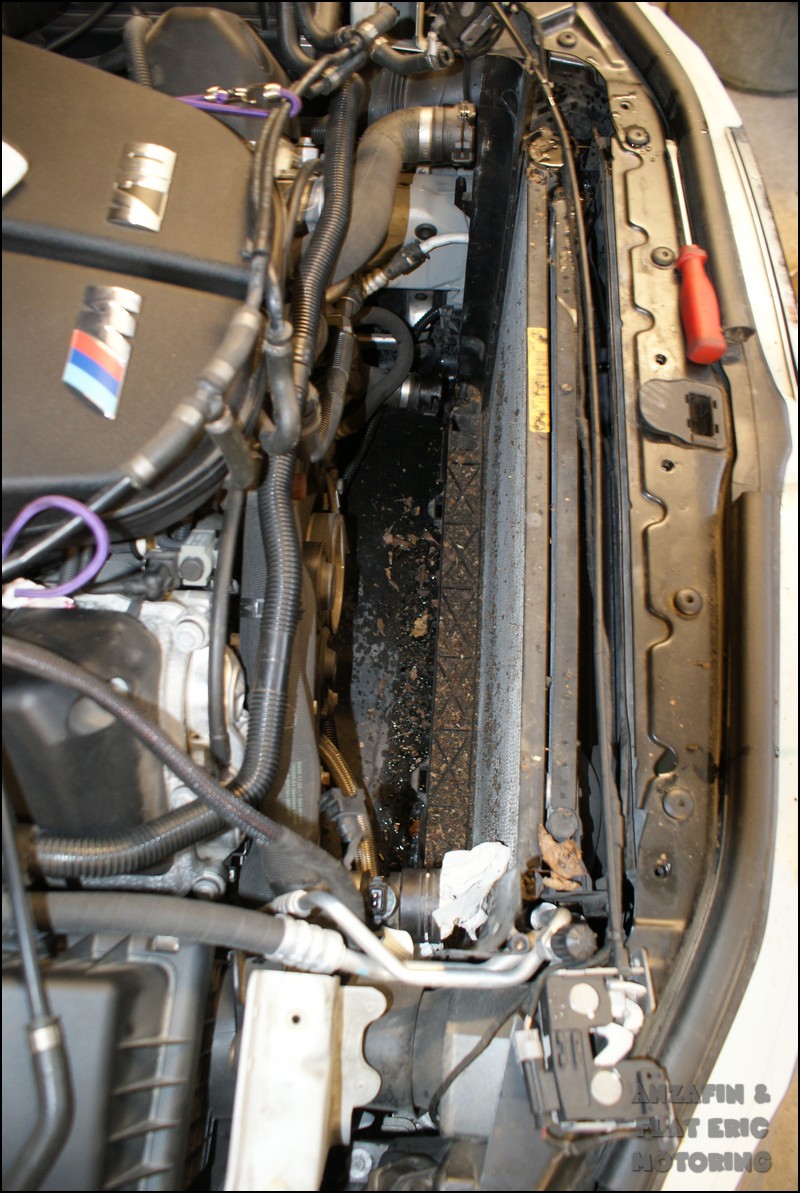
The radiator then comes up only by lifting it.
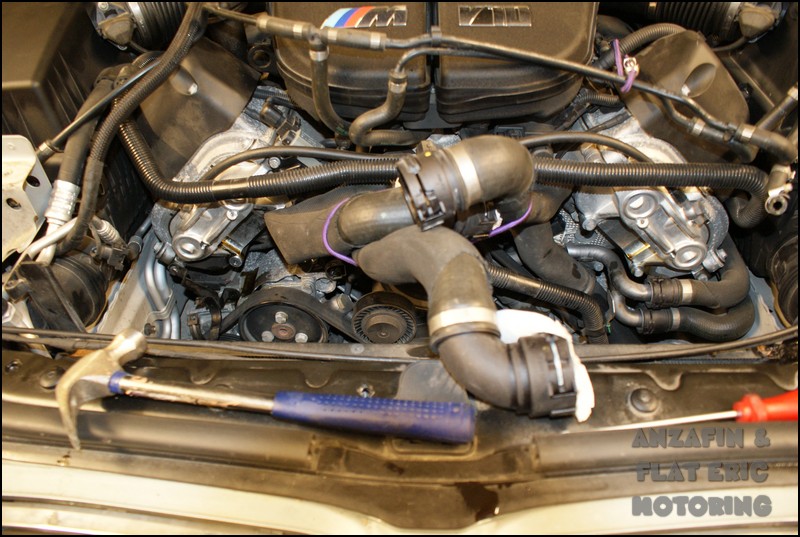
This is the room you will have for working with the solenoids.
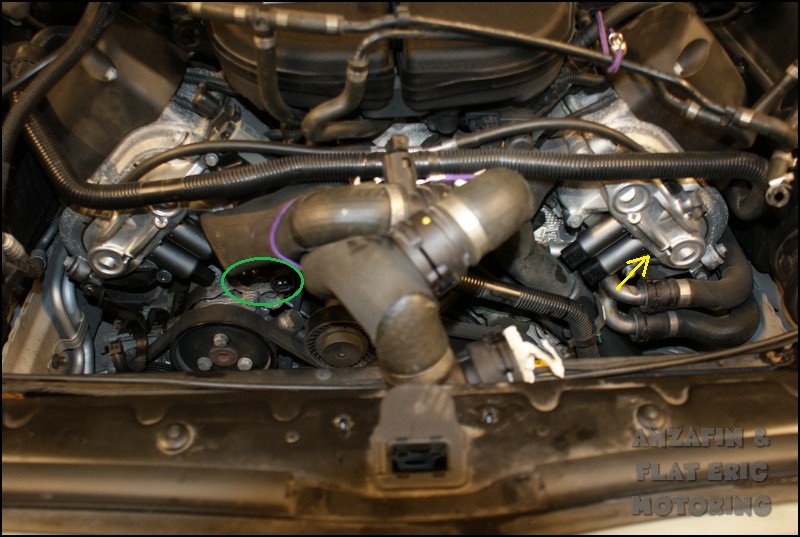
The most annoying job is to remove the solenoids. First the electric plugs need to be removed (In this pic they have been removed already.Green circle.). They're easy, but you may want to mark them so that you don't mix them when plugging them back in. The solenoids are held in place with two TORX T20 screws each, and the other screw is hiding (yellow arrow). I used a friend, mirror, flashlight and different T20 tools to open them. The solenoids can sit a bit tight in their place, so I needed to put a little screwdriver between the VANOS body and the solenoid and simply crank them out slowly. By the way, the new solenoids are already installed this picture. The old ones were plastic covered, the new ones are metallic.
Solenoids removed. There will be some oil coming out of VANOS, clean it.
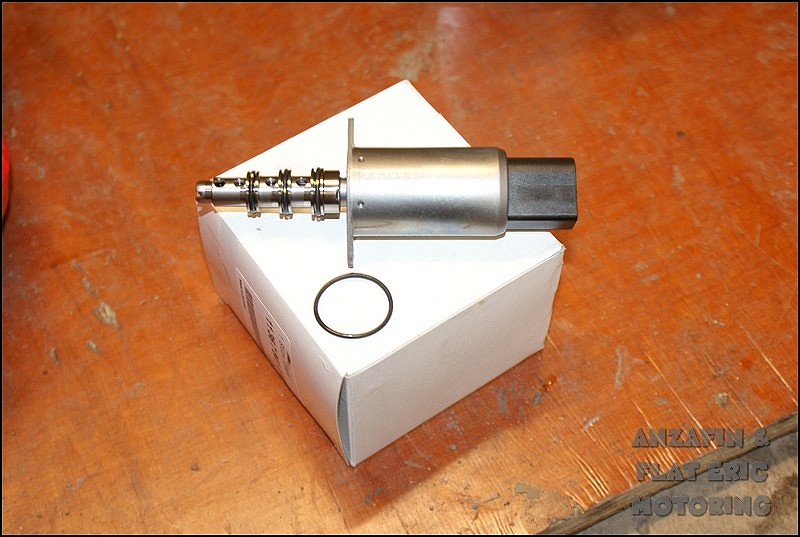
Here's the new one. First lubricate the O-rings with motor oil. Then install the bigger O-ring on the bottom of the VANOS body. There's a place for it. Then put the solenoid back. I didn't try to push it to bottom with force. I just used the screws to get it sit tight.
Then you need to put everything back in opposite order. The coolant system is pretty smart, you just need to fill the coolant in until the bobber sits 18mm over the fill cap edge. Then the system bleeds itself when the engine is run approx. 15mins on idle.
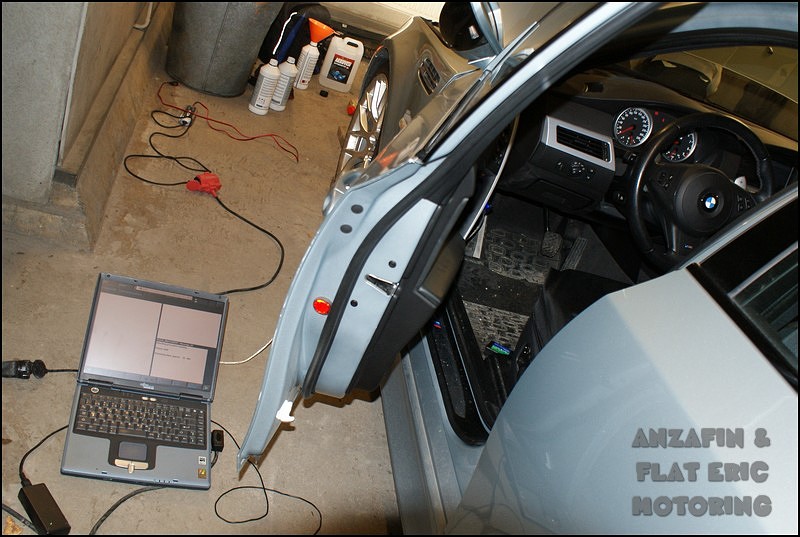
The VANOS oil system needs bleeding too. I did this with the DIS (Vanos ventilation/bleeding). The program runs the engine for 18mins and varies the rpms. Interesting sounds can be heard during the process.
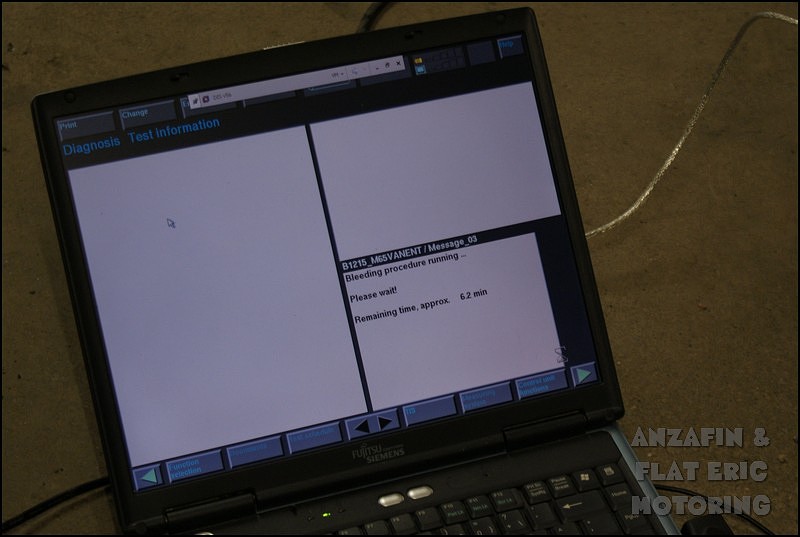
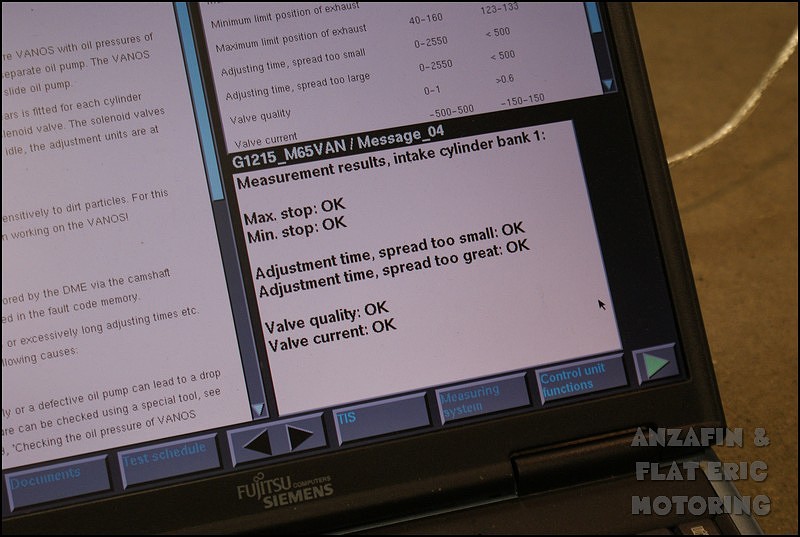
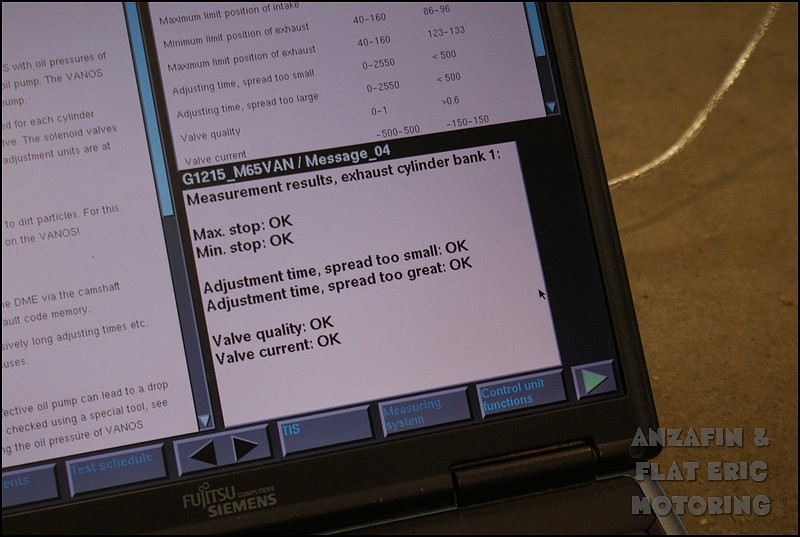
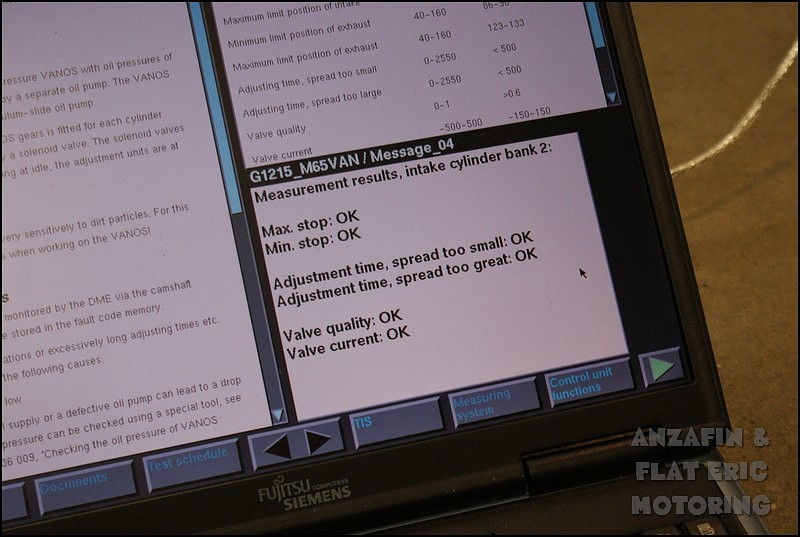
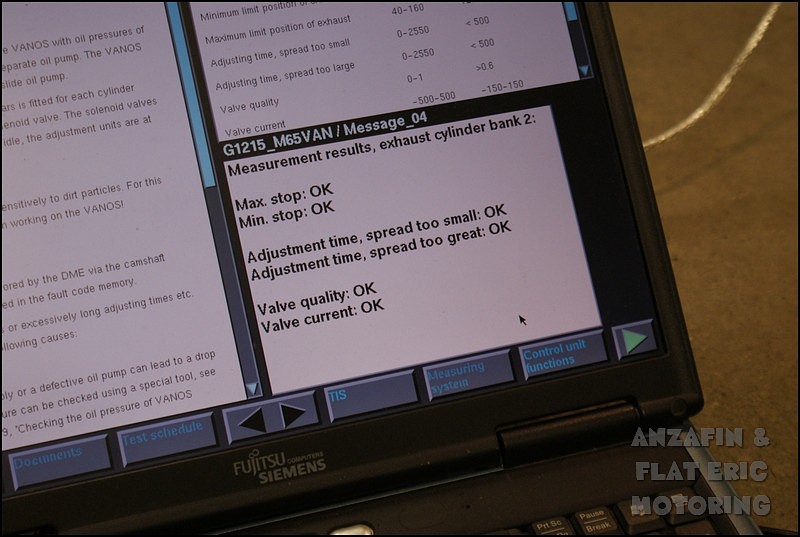
Everything went great and after the bleeding procedure I ran the VANOS test again. Here are the results.
Thanks for watching .
.
- Antti -
ps. I can do a separate DIY thread on DIY section about this.
Changing the VANOS solenoids.
Here's my report/DIY about changing the VANOS solenoids.
I ran a VANOS test few weeks ago and the report said that three out of four solenoids are NOT OK and they need to be changed. The test gives an index to every solenoid, and the best value is 1.0. As you can conclude, the limit between the "OK" and "NOT OK" is the 0.6.
While I was preparing for the job, I modded this holder for a TORX T20 key which is needed to remove the solenoids. The advice for this came from the M5Board member b767capt. Thumbs up for him for all the help he provided
.All systems are go!
At first a covering plate must be removed. It is hold in place with nine TORX T30 bolts (red/orange arrows). I also removed the hood latches to get this plate a bit further than a feet away lol! The hood latches are also hold in place with TORX T30 bolts (green circles). When these have been removed, the covering plate can be removed towards the big orange arrows.
The hood latch cables and detector wiring goes under the plate and they must be released from the little hooks.
Then we have to remove another covering plate that sits on top of the radiator and the electric fan. Five TORX T25 screws.
There are two little water hoses that are attached to the cowl with different clips. Detach them.
Oh crap!
The fan can be removed by lifting it a bit, then the "wings" on left and right have to be turned away from the holders. Then lift the fan up. I broke the other wing to get the fan easier out next time
.The power cord is easy to remove (yellow circle). Then put the fan aside. TIS says there can be two cords attached but I had only one.
To drain the coolant I removed the little service flap on the bottom of the right front corner. It is fastened with typical undercarriage screws (M8).
The S85 radiator is divided to two sections, one for both cylinder banks. Therefore there's two draining plugs in it. As b767capt adviced, I installed draining tubes on both of them. The inner diameter is 9.3mm. I used strong fuel line for this purpose so that I can leave them installed for the next time. The lower draining plug can be seen in this picture.
And here's the upper one with the tube attached. Here you can also see the wire clamp that holds the big water hose in place and the little water hose that is attached with the typical hose clamp. There are four big water hoses and two smaller and these have to be removed after draining the coolant.
Here are the draining hoses. It is easy to drain the coolant through these without messing the whole engine bay.
Draining itself is easy. First open up the fill cap, then open the red finger screws.
The radiator then comes up only by lifting it.
This is the room you will have for working with the solenoids.
The most annoying job is to remove the solenoids. First the electric plugs need to be removed (In this pic they have been removed already.Green circle.). They're easy, but you may want to mark them so that you don't mix them when plugging them back in. The solenoids are held in place with two TORX T20 screws each, and the other screw is hiding (yellow arrow). I used a friend, mirror, flashlight and different T20 tools to open them. The solenoids can sit a bit tight in their place, so I needed to put a little screwdriver between the VANOS body and the solenoid and simply crank them out slowly. By the way, the new solenoids are already installed this picture. The old ones were plastic covered, the new ones are metallic.
Solenoids removed. There will be some oil coming out of VANOS, clean it.
Here's the new one. First lubricate the O-rings with motor oil. Then install the bigger O-ring on the bottom of the VANOS body. There's a place for it. Then put the solenoid back. I didn't try to push it to bottom with force. I just used the screws to get it sit tight.
Then you need to put everything back in opposite order. The coolant system is pretty smart, you just need to fill the coolant in until the bobber sits 18mm over the fill cap edge. Then the system bleeds itself when the engine is run approx. 15mins on idle.
The VANOS oil system needs bleeding too. I did this with the DIS (Vanos ventilation/bleeding). The program runs the engine for 18mins and varies the rpms. Interesting sounds can be heard during the process
.Everything went great and after the bleeding procedure I ran the VANOS test again. Here are the results.
Thanks for watching
.- Antti -
ps. I can do a separate DIY thread on DIY section about this.
Last edited by Anzafin; Feb 25, 2013 at 01:26 PM.